
Malaria Awareness and Prevention
Educational resource
Understanding Malaria
Malaria is caused by Plasmodium parasites transmitted through the bites of infected Anopheles mosquitoes. Untreated malaria can quickly become life-threatening, so early diagnosis and treatment are critical.
Symptoms
- Fever and chills, often in cycles
- Headache, muscle and joint pain, and profound fatigue
- Nausea, vomiting, diarrhoea, abdominal pain, or cough
- Rapid breathing or heart rate
Causes and Transmission
An infected mosquito feeds on a person and injects parasites into the bloodstream. The parasites travel to the liver to mature before entering red blood cells, where they multiply and cause symptoms.
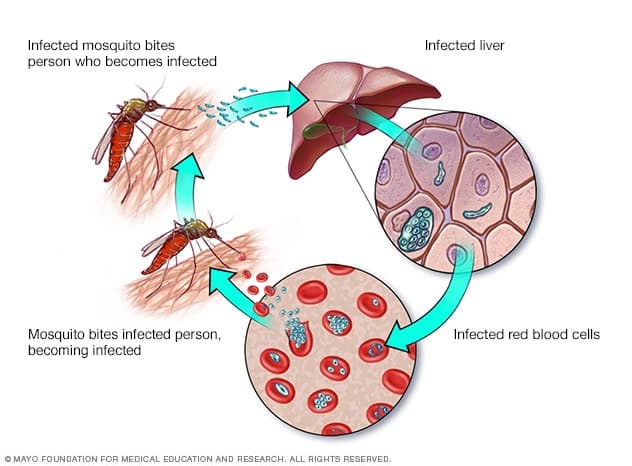
- Mosquito becomes infected after feeding on a person with malaria
- Parasites mature inside the mosquito
- Infected mosquito bites another person, transmitting the parasites
- Parasites travel to the liver and later invade red blood cells
- A new mosquito can pick up parasites and continue the cycle
Malaria can also spread through infected blood, including from mother to unborn child, blood transfusions, or shared needles.
Complications
- Cerebral malaria, which can trigger seizures or coma
- Breathing problems from fluid in the lungs
- Organ failure affecting the kidneys, liver, or spleen
- Severe anaemia or dangerously low blood sugar
Prevention
- Avoid mosquito bites by wearing long sleeves and trousers, especially from dusk to dawn
- Use insect repellent containing DEET, picaridin, IR3535, oil of lemon eucalyptus (OLE), para-menthane-3,8-diol (PMD), or 2-undecanone
- Treat clothing and bed nets with permethrin and sleep under insecticide-treated nets
- Consult a healthcare provider about preventive medicines before, during, and after travel to malaria-prone areas